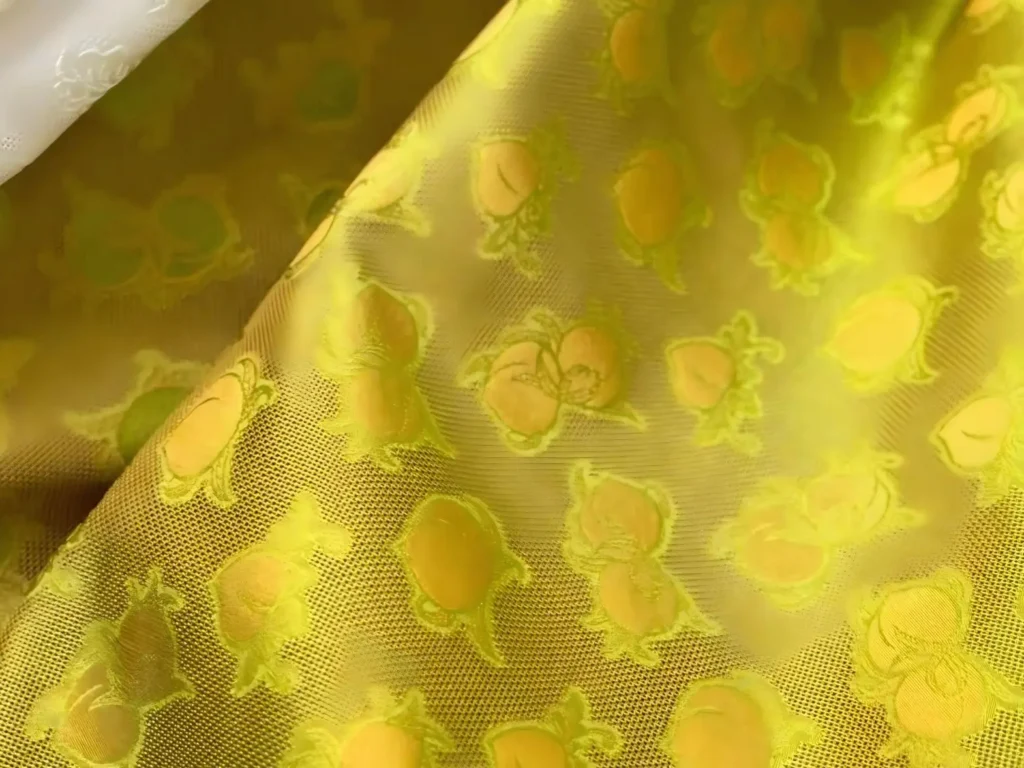
Have you ever wondered ‘ what is silk ‘ when your fingertips slide through the delicate fabric like running water ? Or do you want to know ‘ is silk breathable ‘ when looking for the most skin-friendly and comfortable clothing ?
In this article, we will deeply analyze the essence of silk through the perspective of popular science, and help you understand why choosing pure silk clothing is not only the ultimate care for the skin, but also an investment in health and quality.
What is silk? The origin and production process of silk
To truly understand the value of SilkYue products, we first need to explore a fundamental question: what is silk ?
Scientific definition of silk
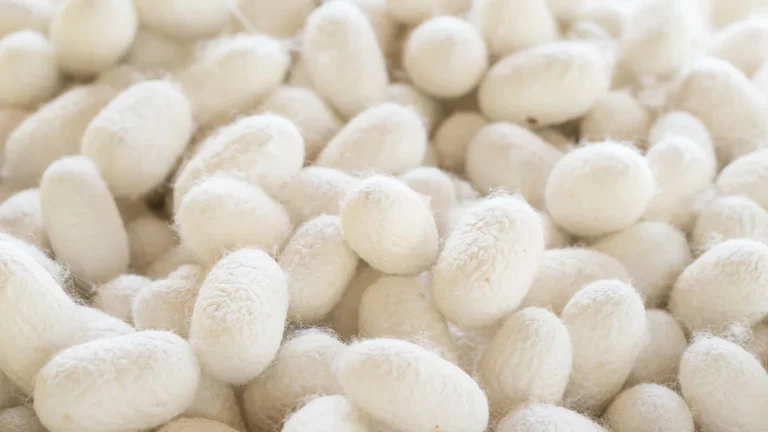
From a scientific point of view, silk is a natural protein fiber. This is a substance secreted by silkworm (Bombyx mori) during the construction of cocoons.
Although modern technology has developed a variety of laboratory biomaterials, silk is still confirmed to be one of the strongest natural fibers in the existing textiles in nature.
This unique protein structure not only endows silk with strength, but also has extremely high biocompatibility with human skin.

A historical footprint spanning 4000 years
Silk is not just a fabric, it is a living fossil of human civilization.
The origin of silk can be traced back to more than 4000 years ago in ancient China.
Initially, it was only used to construct cocoons and nets to protect silkworms, but Chinese ancestors found its textile value.
Subsequently, this white fiber spread to the world through the famous ‘ Silk Road ‘ and became a link between Eastern and Western civilizations, symbolizing wealth and status.
How was pure silk born?
The standard silk production process is extremely fine: starting from careful silkworm rearing, to the collection of cocoons, then softening sericin by boiling cocoons, and finally fine reeling and weaving.
At SilkYue, we have more stringent requirements for this process. Different from the large-scale chemical treatment of industrialization, we adhere to the use of heritage techniques.
In our production process, harmful chemical additives are strictly avoided to retain the natural activity of mulberry silk to the greatest extent. This means that every SilkYue product in your hands is not just a commodity, but a craft that has been carefully crafted.
Don’t be misled by ‘ Satin ‘: pure silk vs. synthetic silk
When buying, consumers often face a huge misunderstanding: equating ‘ Satin ‘ with ‘ Silk ‘. Satin is actually a weaving technique, not a material.
Many of the products on the market advertised as ‘ Satin ‘ are actually blends of polyester fiber or other synthetic materials, with extremely poor air permeability.
Pure Silk refers to the fiber composition. SilkYue uses 6A (highest grade) pure mulberry silk, rather than cheap synthetic alternatives. Our fabrics not only have satin luster, but also have air permeability and moisture retention functions that synthetic fibers cannot match.
Extremely delicate touch data
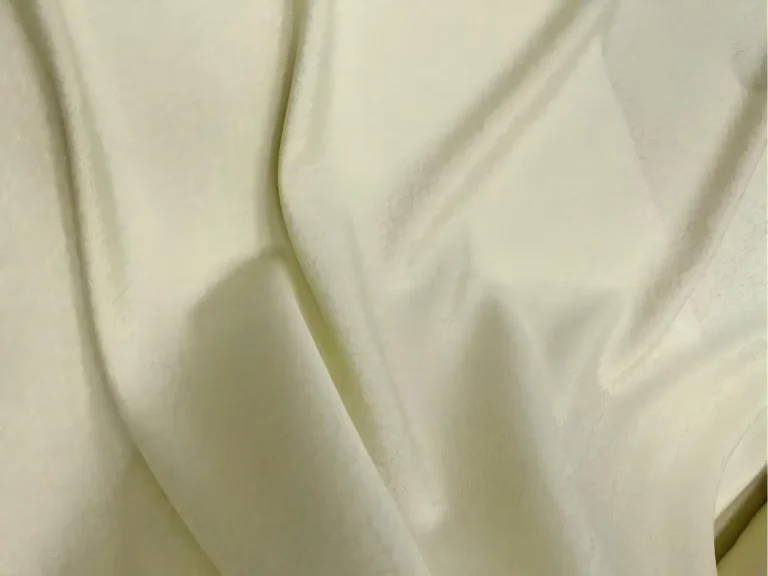
Why does silk feel so different? The data reveal the truth: the fineness of silk fiber is only 1 / 3 of cotton fiber. This micron-level fineness makes the silk surface more smoothly reflect light and form an iconic pearl-like luster ; at the same time, it greatly reduces the friction on the skin and brings you a luxurious touch.
Unique characteristics of silk: why it is so popular
The reason why silk can pass through the peak of fashion and comfort for thousands of years is not only due to historical feelings, but also due to its irreplaceable physical characteristics.
Unique luster and amazing strength
The luster of silk does not come from chemical coating, but from the unique triangular prism structure of silk fiber. This structure can refract light at different angles and produce a natural flow of color.
What ‘s even more surprising is its strength – despite its seemingly delicate appearance, the tensile strength of high-quality silk at the same diameter is even comparable to that of steel wire.
In SilkYue, we use this natural toughness to further enhance the durability of the product through high-density weaving, making it a wardrobe item that can accompany you for a long time.
It is better than cotton and wool wearing experience
In comparison with other natural fabrics, silk shows its status as the ‘ King of Fabrics ‘:
Smoother than cotton: The friction coefficient of the silk surface is extremely low, which means it is smoother than high-quality cotton. This feature greatly reduces the friction of the fabric on the skin and hair, helping to prevent sleep indentation and hair fickleness.
Lighter than wool: Despite its excellent thermal properties, silk weighs much less than wool. It provides a zero-pressure wearing experience, allowing the body to enjoy the warmth without any burden.
Key difference: silk vs. satin
In order for consumers to make informed choices, we also explore ‘ differences between satin and silk ‘ on our website. In short, silk is the ingredient, and satin is just the weave. Many cheap satin products on the market use polyester fiber, which is smooth but stuffy.
Choosing SilkYue ‘s products means that you ‘re choosing real natural mulberry silk ingredients, not just satin artificial gloss.
Embracing a green future: environment and sustainability
Silk is a 100 % natural and biodegradable material, which means that it will eventually return to nature and will not remain on the earth for hundreds of years like synthetic fibers.
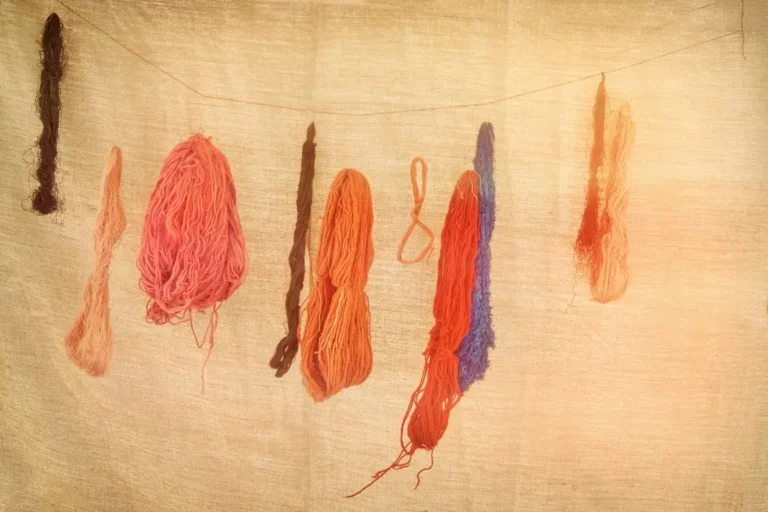
However, we are also well aware of the environmental problems that may exist in traditional silk production. SilkYue is therefore committed to promoting sustainable fashion. In addition to adhering to ethical procurement, our ‘ pure silk ‘ products strictly use environmentally friendly dyes and sustainable processes in the dyeing and finishing stages. This not only ensures the safety of the fabric to sensitive skin, but also minimizes the pollution of water resources and the footprint of the environment.
Is silk breathable? Scientific analysis of air permeability of silk
This is one of the most common questions we receive at SilkYue. The short answer is: Yes, silk is highly breathable. But in order for you to truly rest assured of your choice, we need to analyze ‘ why ‘ from a scientific perspective.
Unique hollow fiber structure
The reason why silk can ‘ breathe ‘ is not only because of the weaving method, but also because of the microstructure of its fiber itself.
There is a hollow structure similar to the insulator inside the silk protein fiber. This natural structure allows air to flow freely inside and outside the fabric while accelerating the evaporation of water.
Because silk fibers are finer and smoother than cotton fibers, they are tight when woven, but create fine and efficient air channels. This natural ‘ microcirculation system ‘ ensures that heat is not trapped between the clothes and the skin.
All-weather temperature control: from summer to winter
Many users living in hot areas are searching for ‘ is pure silk breathable in hot weather ‘.
The answer is yes. Silk is not only breathable, but also has excellent moisture absorption and perspiration ability. In the hot summer, it can quickly absorb and release the body ‘ s sweat, keep the skin dry and cool. On the contrary, in winter, the hollow fiber can lock the body temperature layer like a thermos flask. This two-way adjustment ability is beyond the reach of synthetic fabrics.
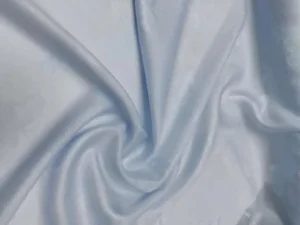
Silk vs. Cotton vs. Linen: Finding the perfect balance
In the big competition of permeability, the data shows everything:
Compare cotton: Lightweight silk (such as the 22 momme gold thickness recommended by SilkYue) is significantly superior to cotton fabrics in terms of air permeability and moisture removal efficiency, and will not become heavy and cold after sweating like cotton.
Compare linen: We have noted that in discussions in communities such as Reddit, there is a view that coarsely woven linen has a slightly better air permeability in extremely humid tropical climates. This is an objective fact. However, the price of flax is a rough touch.
SilkYue ‘s advantage lies in its balance: our pure silk provides excellent air permeability while retaining a water-like smoothness that linen cannot match. For users seeking the ultimate comfort experience, silk is undoubtedly a better multi-functional choice.
Health dividends from breathability
The air permeability of fabrics is not only related to cold and warm, but also to health. This leads to ‘ benefits of breathable silk for skin ‘.
Since silk can effectively reduce heat accumulation and sweat retention, it greatly reduces the risk of bacterial growth. For sensitive muscles, eczema patients or allergic people, SilkYue breathable silk is like a second layer of healthy skin, can reduce the rash caused by overheating, but also use its amino acid composition to help lock the skin moisture, to achieve ‘ wear on the skin care ‘.
Does wearing silk make me sweat? Does it absorb body odor?
This is a common misunderstanding about ‘ permeability ‘.
Won ‘t make you sweat: As the article mentioned, silk is highly breathable. Unlike polyester fiber (sweaty), silk can make heat dissipate quickly.
Anti-odor ability: Silk has natural antibacterial properties. It can not only quickly dehumidify, but also inhibit the growth of bacteria, which means that even in hot weather, silk is not easy to produce unpleasant smell after absorbing sweat like cotton.
Since the silk is so breathable, is it difficult to maintain? Do you need dry cleaning every day?
Many people give up silk because they are worried about the trouble of maintenance, which is a lot of worry. Although silk is indeed more precious than synthetic fibers, it does not require frequent dry cleaning.
Daily home hand wash can completely maintain its breathability and luster. The key is to use the right water temperature and detergent.
Want to know the detailed steps? Read our complete guide: How to Wash Silk and Remove Stains and Wrinkles
Is the real silk ‘ slippery ‘ to the touch?
This is a sensory skill to distinguish true and false silk.
Many people mistakenly believe that silk is extremely ‘ slippery ‘ or even greasy like some cheap Satin pyjamas. In fact, the true pure silk touch is more inclined to ‘ soft waxy ‘ and ‘ wax-like delicate ‘, rather than simply ‘ slippery ‘. Its friction with the skin is moderate, warm and not cold.
If you want to get a deeper understanding of the differences in feel and texture, it is recommended to read: What Is the Difference Between Satin And Silk
Why is silk the best fabric to improve sleep quality?
This is directly related to the ‘ micro-climate regulation ‘ ability of silk.
Studies have shown that high body temperature during sleep is one of the main causes of insomnia. Due to the porous structure of silk (as we mentioned in the article), it can act as a natural thermostat during your sleep – sweating when hot, and keeping warm when cold. This constant temperature characteristic helps to maintain deep sleep. In addition, its smooth surface also reduces the generation of sleep striations.
Is the air permeability of all mulberry silks the same?
Not exactly the same. The grade of silk determines the uniformity and impurity content of the fiber, which directly affects the air permeability.
SilkYue only uses the highest grade of mulberry silk, and its fiber is long and unbroken. The pores of the fabric are more uniform, and the air permeability is much higher than that of low grade silk or wild silk.
What is mulberry silk and why is it regarded as top? Click here for more details: What is Mulberry Silk
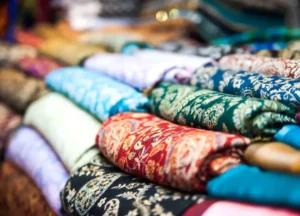
Looking to buy fabric?
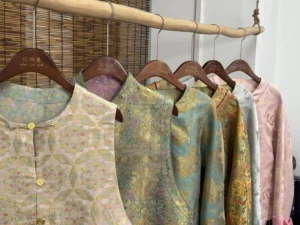
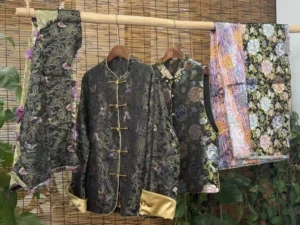
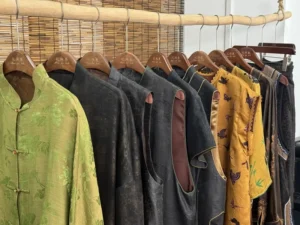
You can also purchase SilkYue’s exquisite fabrics and make your own favorite items.
Customization and Innovation
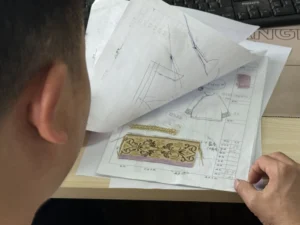
You can tell us the fabrics and styles you like (clothes, pants, sachets, bags, etc.), and SilkYue will make customized samples.