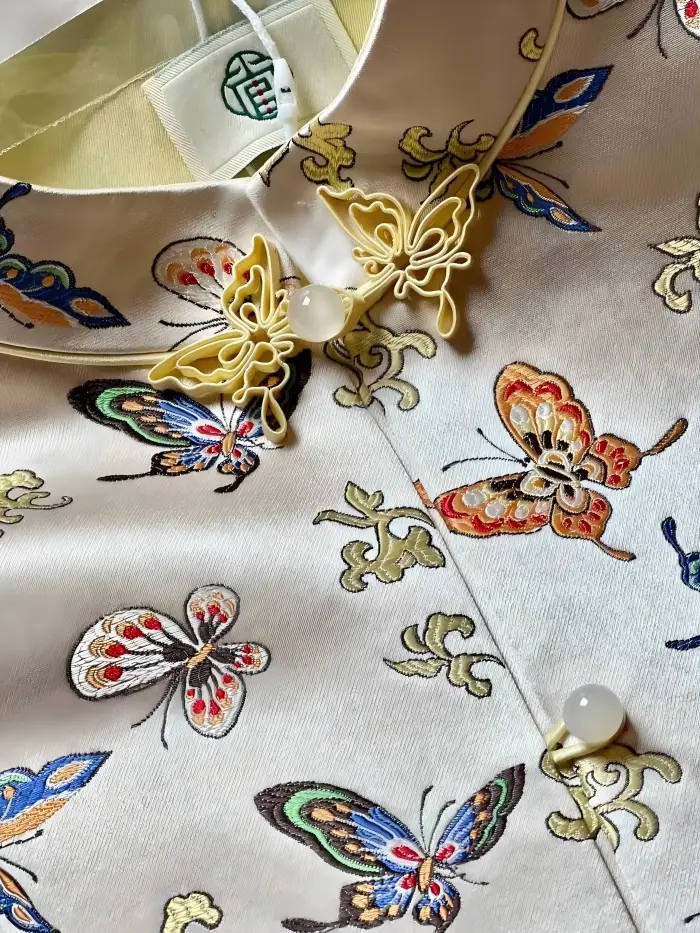
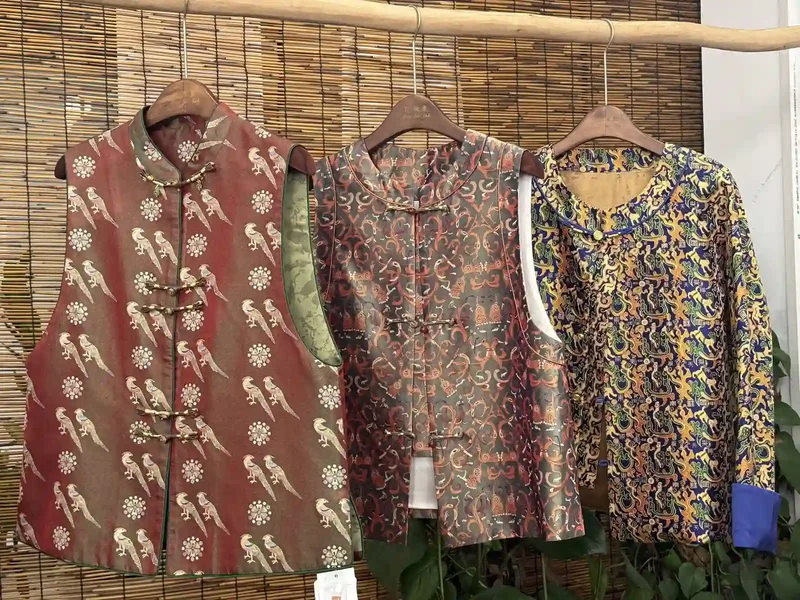
Shu Brocade

Shu Brocade

Shu brocade, also known as Sichuan embroidery, is a specialty of Chengdu, Sichuan Province. In 2006, it was listed in the first batch of China's national intangible cultural heritage and is considered the "mother of Chinese brocade."

"Shu" is the ancient name for Sichuan, and "Brocade" refers to the colorful jacquard silk fabric. It is named after its place of origin, hence the name Shu brocade.

Shu brocade is a jacquard fabric woven using silk thread dyed in five primary colors (red, yellow, green, blue, and black).

The pattern is created using warp threads, then colored stripes are added to create or enhance the pattern, using a combination of geometric patterns and decorative motifs.

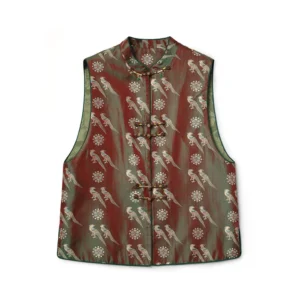
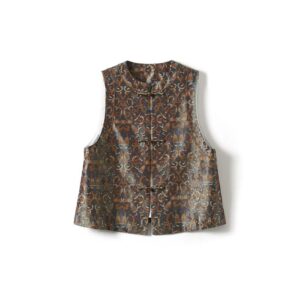
Zhai Niao Shu Brocade Silk Vest Close-up 5

Craftsmanship, Value and Heritage

Shu brocade, passed down through generations of artisans over two thousand years, holds its value in its craftsmanship.

To this day, due to its complex production process, many steps cannot be replaced by machines and must be completed by hand.

Shu brocade is beautiful, with vibrant colors and rich designs, imbued with auspicious meanings and rich in folk customs and regional characteristics.
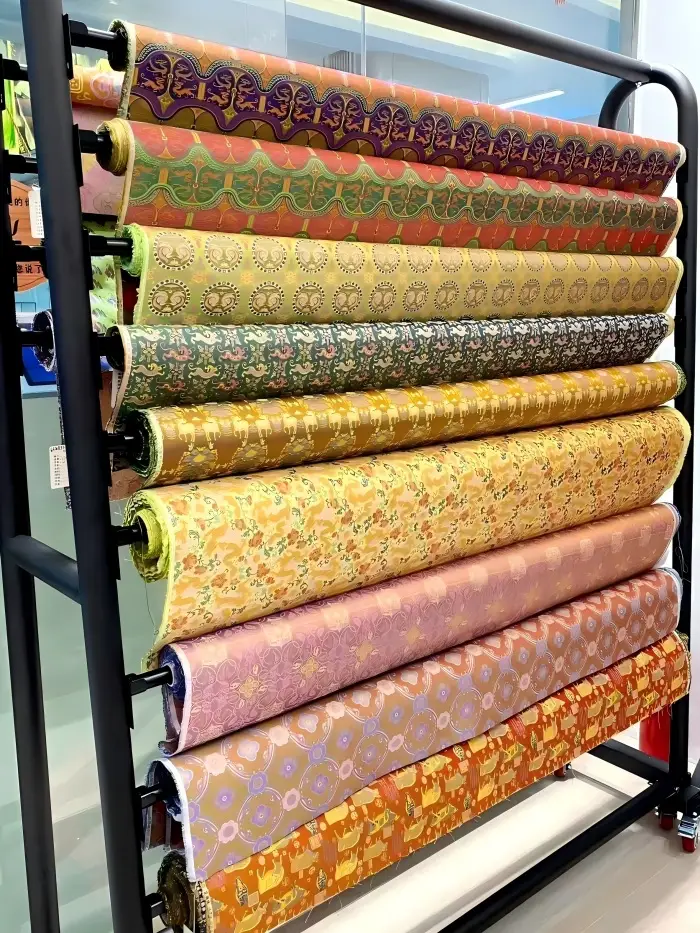
Silkyue Shu Brocade Fabric

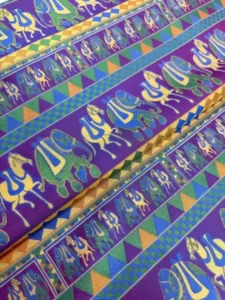
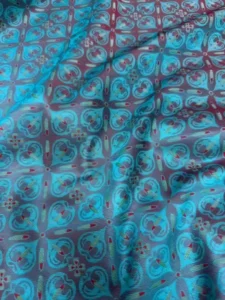
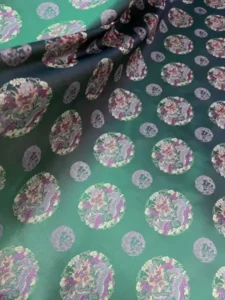
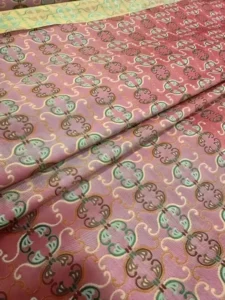
Silkyue, which has been in the silk industry for many years, also has several self-designed Shu brocade fabrics.
If you do not find a favorite fabric, please contact us, we still have a lot of beautiful fabrics did not show it.

Hu Deyin Great Master

As the authority in the field of brocade, Master Hu Deyin's most direct and core connection with Shu brocade lies in his profound research and key restoration of the traditional skills of Shu brocade.
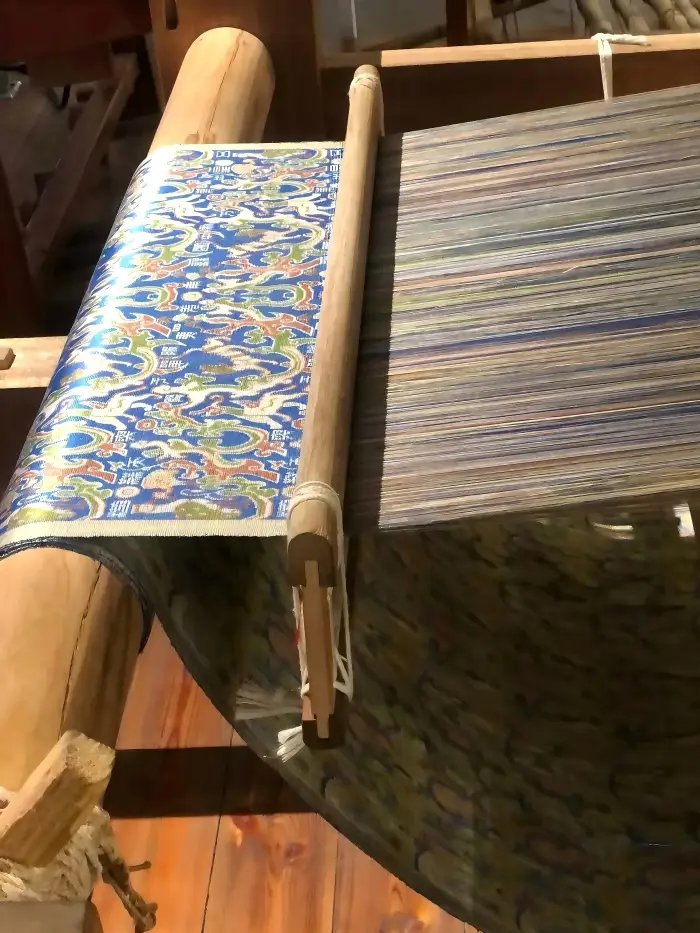
He has successfully studied and restored the 'Xiaohualou Shu Brocade Machine', which represents the weaving technique of Shu Brocade.
This work not only rescues the technique of Shu Brocade, an intangible cultural heritage, but also lays an important foundation for his systematic mastery of the technical system of Chinese brocade in past dynasties.

Zhang Hecai Great Master

Zhang Hecai is a national representative inheritor of Shu brocade weaving skills.
From the early 1980s, he began to study Shu brocade skills from the grassroots technicians in Chengdu Silk Weaving Factory.
For more than 30 years, he has overcome many technical problems, innovated and restored the lost process, and reproduced the beautiful patterns of Sichuan brocade.
He founded the brand, promoted Shu brocade to modern life, and trained more than 30 young weavers to inherit their ingenuity.

What is Shu Brocade (Sichuan Brocade)?

Shu Brocade is a kind of traditional Chinese brocade, which originated from Sichuan ( anciently known as ‘ Shu ‘ ) and has a very long history and cultural value.

Silk Yue ‘s brocade is made of 100 % mulberry silk, showing high luster, delicate hand feeling and exquisite texture. It is a very typical pure silk brocade fabric and luxury silk textile.

SilkYue ‘s Shu brocade is fully woven using the traditional Jacquard process, which makes the pattern complex and three-dimensional.

In the production process, there are many manual links : warping, arranging and weaving, which ensures the process accuracy and cultural inheritance of the fabric.

Using Jacquard machine and special loom, combined with modern technology and traditional skills, the Shu brocade produced is both high-end and rich in design sense.

SilkYue provides exclusive Shu brocade patterns, including but not limited to:

‘Five stars out of the East ‘: traditional cultural theme, symbolizing auspicious and oriental culture with five-star pattern;

‘Zhai Niao ‘ (Zhai bird / colored bird) pattern: it reflects the oriental natural meaning and artistic beauty.

These exclusive patterns make SilkYue ‘s brocade not only a fabric, but also a carrier of culture and art, which is very suitable for designer brocade fabric or high-set dress.

SilkYue ‘s Shu brocade is mainly used in high-end fields, suitable for the following purposes:

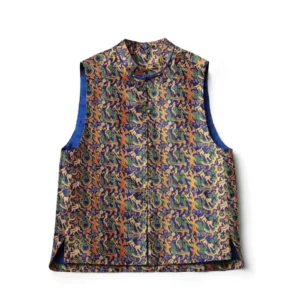
Haute couture: Shu brocade jacket, Shu brocade vest, and evening gown, etc.,

Stage / Ceremony Dress: The gorgeous and intricate patterns of its brocade are ideal for high-profile ceremonial occasions.

Designer series: designers can use SilkYue ‘s Shu brocade fabric to create couture brocade works

You can buy or customize SilkYue ‘s brocade in the following ways:

Brocade Fabric by Meter: Suitable for designers or wholesalers

Ready-to-wear Brocade Garment: Some styles are ready-to-wear

Custom Shu Brocade Clothing: Supports pattern, color, and pattern customization

Custom patterns: if you have special design needs, you can customize the exclusive brocade patterns

Sample service: SilkYue provides swatches for evaluation.

In order to ensure the longevity and quality of the Shu Brocade / Silk Brocade fabric, it is recommended to maintain it in the following ways:

Dry cleaning: It is recommended to send to a professional dry cleaner to protect the jacquard and silk structure.

Hand washing: If you choose hand washing, please use a special cleaning agent for silk and soak it gently with warm water.

Ironing: It is recommended to iron at low temperature at room temperature, and use a cloth spacer to avoid direct embossing and damage to the fabric.

Store: Hang the brocade fabric / garment on a hanger and place it in a dry, dark place to avoid folding and indentation.

Here are some important criteria for judging high-quality Shu Brocade Fabric:

Fabric composition: whether it is really 100 % pure silk brocade, rather than blended.

Pattern details: Jacquard jacquard is clear, the edge of the pattern is fine.

Handle and luster: High-quality Shu brocade should have the luster and smoothness of silk, while slightly carrying the heavy feeling of brocade.

Process: whether there are traces of hand-arranged flowers, mounting and so on.

Sample testing: Getting swatches before ordering is a highly recommended step.

Supplier qualification: Select brands like SilkYue that focus on traditional crafts and high-end quality.

SilkYue ‘s Shu brocade has obvious advantages:

100 % mulberry silk to ensure luxury and natural quality.

The combination of traditional Jacquard jacquard + manual process embodies cultural heritage and craftsman spirit.

Unique patterns (such as ‘ five stars out of the East ‘, ‘ Zhai Niao ‘), with brand recognition and cultural image.

Flexible purchase: support by meter purchase, custom clothing, and pattern customization.

Sample service: Shu brocade fabric samples are provided directly, which is convenient for evaluation and sample.

Suitable for high-end fashion: its fabric is very suitable for high-end design fields such as couture and dress.

Looking to buy fabric?

You can also purchase SilkYue's exquisite fabrics and make your own favorite items.

Customization and Innovation

You can tell us the fabrics and styles you like (clothes, pants, sachets, bags, etc.), and SilkYue will make customized samples.

Shu brocade Historical Development

PeriodDevelopmentKey Events/Characteristics
Spring and Autumn & Warring StatesEmergence of Shu Brocade with advanced sericulture in Sichuan (ancient Shu).While other regions produced brocade, Shu’s techniques eventually surpassed and spread nationwide.
Han DynastyGolden age of Shu Brocade, becoming a luxury commodity.“Five Stars Rise in the East” brocade armguard discovered (national treasure).
World’s earliest pattern looms excavated from Laoguanshan Han Tomb.
Three KingdomsBecame Shu Kingdom’s economic pillar.Zhuge Liang stated: “Our military funds depend entirely on Shu Brocade!” (Recorded in his works).
Tang DynastyTechnical pinnacle with diverse patterns, exported globally.
Featured dragon-phoenix, lion, and lotus motifs. Exported to Persia and Japan – the “Hermès” of its day.
Song & Yuan DynastiesOfficial “Chengdu Brocade Institute” established for standardized production.“Shu Brocade Manual” from Yuan Dynasty documented various exquisite designs.
Ming & Qing DynastiesDeclined during late Ming wars, revived with innovations in Qing.Qing developed signature “Rainbow Stripe” and “Moonbeam” brocades with gradient coloring.
Modern EraRecognized as national intangible cultural heritage.Chengdu Shu Brocade Museum preserves traditional techniques while adapting to modern fashion.

Shu brocade Craftsmanship

1. Materials

Shu brocade is primarily made of dyed pure mulberry silk thread.

Dyeing the dyed silk thread primarily relies on natural plant pigments, resulting in Shu brocade’s vibrant, rich, and durable colors.

2. Craftsmanship

Shu brocade weaving techniques are divided into two main categories: warp and weft.

Warp brocade uses warp threads for pattern creation, while weft brocade uses weft threads for pattern creation.

From pattern design and weaving techniques to weaving and weaving, Shu brocade continues its ancient traditions.

Later, the advent of shuttle looms replaced traditional brocade weaving, but the techniques remain largely the same.

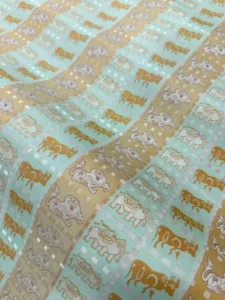
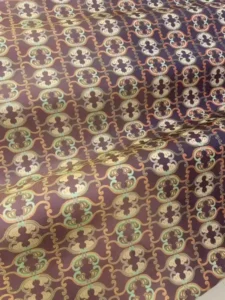
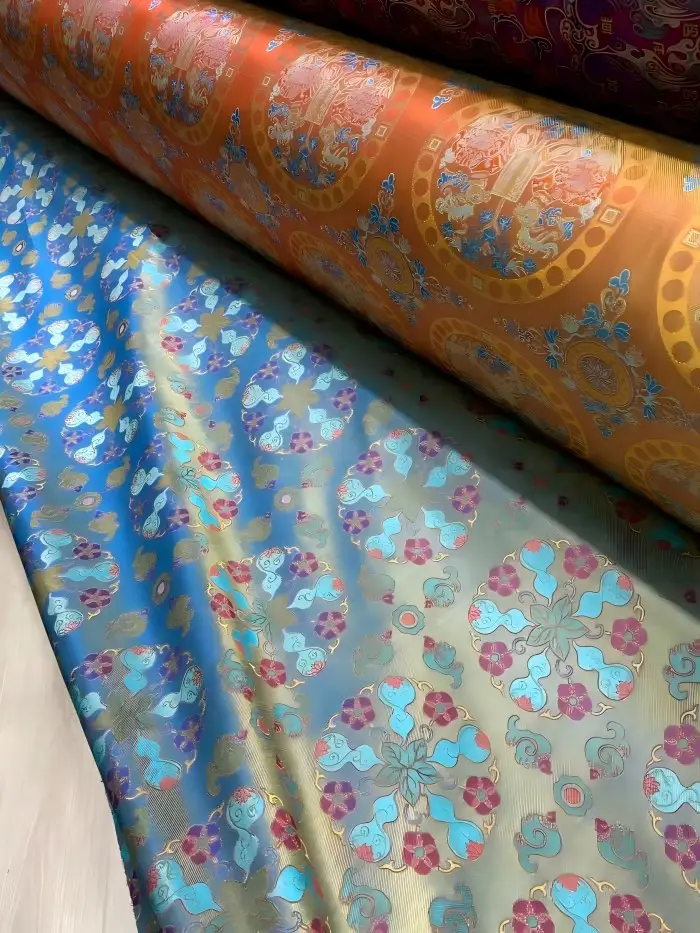
Shu Brocade Fabric 4
Shu Brocade Fabric 3

Shu Brocade Varieties

Shu Brocade has numerous varieties, including common traditional varieties such as Rain Silk Brocade, Scattered Flower Brocade, Huanhua Brocade, Minzu Brocade, Square Brocade, and Colorful Halo Brocade.

Rain Silk Brocade: The brocade surface is composed of multicolored warp threads. The white and colored warp threads vary in thickness and transition, creating a rich, rain-like pattern. Various beautiful patterns are sewn onto this surface, blending the colors and highlighting the patterns.

Scattered Flower Brocade: Characterized by patterns that cover the entire fabric, the fabric is interwoven with different single- or multi-colored patterns, creating a rich pattern with a strong local flavor.

Huanhua Brocade: Also known as “Flower Brocade,” it features plain and satin weaves. The patterns are designed based on the changing flow of streams, resulting in simple, elegant designs with a simple elegance.

Minzu Brocade: Woven with gold and silver threads inlaid into the brocade surface in various colors. Its characteristic feature is that the patterns on the brocade surface appear lustrous when illuminated by sunlight.

Fangfang brocade: This brocade features squares of varying colors and sizes, with elegant floral patterns woven into them using colored silk threads.

Caiyun brocade: This brocade features distinct layers of light and dark, with vibrant and colorful patterns, creating an elegant and luxurious look.

Shu brocade Cultural Value

Shu brocade, the most famous of China’s four famous brocades, is a signature Chengdu craft and a milestone in Chinese brocade production.

Traditional Shu brocade is woven using traditional Shu looms and traditional handcraftsmanship.

Its culture is imbued with the regional characteristics of Shu, showcasing the decorative style favored by its people and embodying their aesthetic tastes and appreciation.

Shu Brocade Fabric 2
Shu Brocade Fabric 1

Shu brocade Modern Inheritance

Chengdu is known as the “Land of Abundance,” and the art of handwoven Shu brocade has been passed down for over 2,000 years.

During the Warring States Period, Shu brocade was an important trade item. It developed during the Qin and Han dynasties, matured during the Tang and Song dynasties, declined in the late Ming dynasty, and slowly recovered during the mid-to-late Qing dynasty.

Handlooms were gradually replaced by modern looms, leading to a decline and decline. Today, authentic Shu brocade has become even more refined.

Shu brocade boasts a long history and profound influence, spreading widely. It reached India, Myanmar, Vietnam, and Laos through the Southern Silk Road, and spread to South Asia through the Northern Silk Road, extending to the Western Regions and Europe.

Throughout history, Shu brocade has been a pillar of Sichuan’s economy.

Throughout the Silk Road, Chengdu Shu brocade reached international markets, facilitating economic and cultural exchanges between China and other civilized regions around the world.