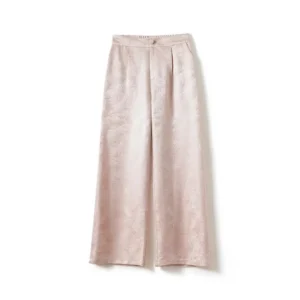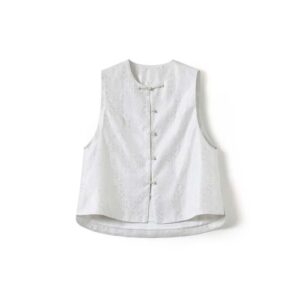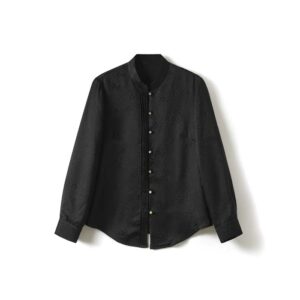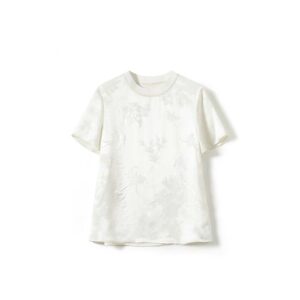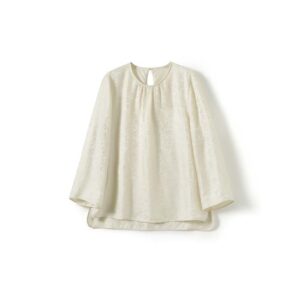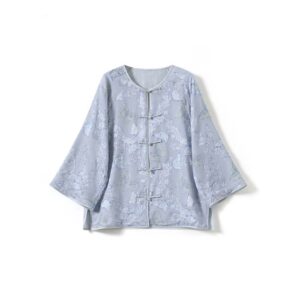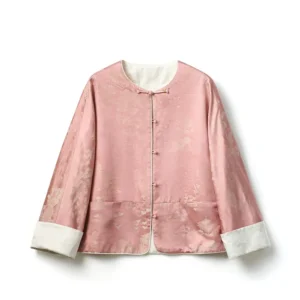
Silk Shirt

Pure Silk

Pure silk is a natural fiber fabric made from silkworms, primarily mulberry and tussah silk. Silk is a relatively expensive fabric widely used in clothing. It possesses the following properties:

Soft and smooth: Silk fabric has a soft hand feel and is comfortable to wear, making it suitable for high-end clothing.

Vibrant color: Silk has excellent dyeing properties and high color saturation, making it suitable for a variety of designs.

Good drape: Silk fabric has exceptional drape, creating an elegant aesthetic.

Pure silk clothing is comfortable, breathable, and has good skin-friendliness.

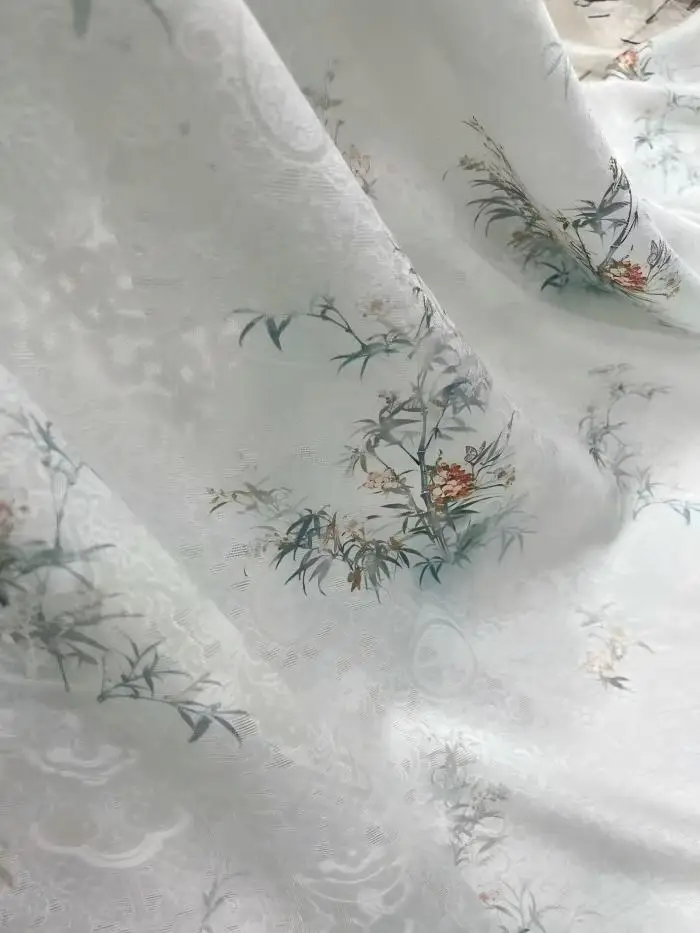
jacquard pure silk short-sleeved top detail 1

Craftsmanship, Value and Heritage

Pure silk is made from mulberry silk through a series of processes, including reeling, weaving, scouring, and dyeing. Traditional techniques such as jacquard weaving impart unique textures and colors.

Silk combines comfort and luxury, making it a preferred material for high-end apparel. However, its production costs are high.

As an intangible cultural heritage craft, SilkYue remains committed to maintaining its original aspirations and continuing its tradition despite facing a talent shortage and the impact of synthetic fibers.

What is Pure Silk ?

‘Pure Silk ‘ refers to 100 % Mulberry Silk in SilkYue, which is a kind of natural protein fiber.
It does not contain any synthetic fiber or blended material, with natural luster, soft feel, and good air permeability and temperature characteristics.
Because it is pure natural silk, it also belongs to a kind of Luxury Silk Textile, which is widely favored by designers and cultural consumers.

Traditional handmade weaving – SilkYue emphasizes the manual process, integrates ‘ traditional weaving ‘ with modern design, and reflects respect for the cultural value of silk.
Cultural value-pure silk is not only a fabric, but also a carrier of Oriental traditional culture, representing elegance, refinement and historical inheritance.
In SilkYue, pure silk is widely used in clothing ( dresses, jacket, vest, etc. ), trousers, high-end accessories ( scarves, shawls ) and household items ( such as art cloth, cushions, etc. ).
Sample support – SilkYue provides pure silk fabric samples for designers or buyers to observe and test before placing an order.

Pure Mulberry Silk is a very high-end and excellent natural fabric. Its advantages include :
Natural luster and luxurious texture : Mulberry silk has a soft and natural luster and is an important representative of Luxury Silk Fabric.
Excellent temperature regulation ability: Silk can adjust the temperature in different environments. It is cool in summer and warm in winter. It is a fiber with good air permeability.
Skin-friendly anti-allergy: pure silk has soft texture and is friendly to sensitive skin. Many pure silk fabrics are also considered to be hypoallergenic because of their natural characteristics.
Light but tough: Although the silk is very light, the silk fiber has good strength under tension ( not contradictory to its delicate appearance ).
Environmental characteristics: Mulberry silk belongs to natural regenerated protein fiber, which is more gentle to the environment than some synthetic fabrics.

Although pure silk is very high-end, there are some points that need attention :
Care complex: pure silk easily wrinkled, easy to be pulled or hooked.
Sensitive to cleaning agents: Do not use strong alkaline or bleach-containing lotions.
Color fastness / dyeing problems: Some bright dyes may fade or stain, so attention should be paid to the test before washing.
High price: Due to the high cost of raw materials and production processes, pure silk is usually more expensive than blended or synthetic fabrics.
Washing frequency should be careful: frequent washing may cause damage to silk fibers.

In order to extend the life of Pure Mulberry Silk / Pure Silk Textile, it is recommended that you carry out maintenance in the following ways :

Hand washing priority
Use warm water ( about ≤ 30 ° C / 86 ° F ), which is the temperature recommended by most silk care guidelines.
Add neutral or specially designed for silk lotion / care agent ( does not contain enzymes, bleaching agents and other stimulating ingredients ).
Soak gently for 2-3 minutes, then stir gently to avoid rubbing hard.

Rinsing and dehydration
Rinse thoroughly with clean water until the residue of the lotion is washed away.
Do not wring / twist. It can be gently wrapped with a clean towel and rolled up to absorb water.

Drying
Natural flat or hang to dry, but to avoid direct sunlight.
Avoid using dryers because high temperature and friction may damage silk fibers.

Ironing
For ironing, please use a low-temperature ( silk or low-temperature ) iron when it is slightly damp.
When ironing, it is recommended to put a clean cloth between the fabric and the iron to avoid direct high temperature contact.
Perlasilk

Storage
Store in a dry, cool place to avoid the sun and humidity.
Please avoid using impermeable plastic bags to avoid mildew.
It can be wrapped in a breathable bag or cotton wrapping paper during storage.

Special attention
Avoid direct contact between perfume, spray, cosmetics and pure silk, as chemicals may damage silk fibers.
To minimize the frequency of washing, not often wear silk can be refreshed by ventilation, steam, and not necessarily washed every time.

In SilkYue ‘s business, pure mulberry silk fabric is usually used for :
Clothing: high gowns, dresses, shirts, trousers, etc.
High-end accessories: scarves, shawls, etc.
Household goods: silk pillow, art decorative cloth, household cloth art
Designer customization: designers can use SilkYue ‘s pure silk fabrics for high-end customization projects.

Handmade weaving: SilkYue emphasizes the traditional process, which makes the fabric not only a kind of fabric, but also the embodiment of culture and craftsman spirit.
Cultural inheritance: Pure silk represents the core of eastern and western silk culture. It is a kind of high-grade fabric, which carries history and culture at the same time.
High-end positioning: fabric quality, design autonomy, sample service and customization capabilities are very strong, suitable for high-end fashion / cultural projects.
Sustainability and respect for materials: Natural mulberry silk is a renewable resource, and SilkYue focuses on the original beauty and cultural value of materials.

Looking to buy fabric?

You can also purchase SilkYue's exquisite fabrics and make your own favorite items.

Customization and Innovation

You can tell us the fabrics and styles you like (clothes, pants, sachets, bags, etc.), and SilkYue will make customized samples.

Pure Silk Historical Development

PeriodRegionKey DevelopmentsImpact & Legacy
~2700 BCEChinaLegendary Empress Leizu discovers silk; sericulture beginsFoundation of silk monopoly; Silk Road origins
206 BCE–220 CEHan Dynasty (China)Silk trade expands via the Silk Road; guarded secret of sericultureGlobal demand rises; silk becomes currency & diplomatic gift
6th Century CEByzantine EmpireSmuggled silkworms from China; start of European sericultureBroke China’s monopoly; silk production spreads to Mediterranean
12th–15th CenturyItalyItalian silk workshops flourish; advanced looms & brocade techniquesRenaissance luxury fashion; established Italy as Europe’s silk hub
17th–18th CenturyFranceLouis XIV promotes Lyon’s silk industry; Jacquard loom inventedFrench silk dominates haute couture; mechanization boosts production
19th CenturyGlobalIndustrial Revolution introduces synthetic dyes & mass productionSilk becomes more accessible but faces competition from cotton & early synthetics
20th–21st CenturyWorldwideJapan perfects mechanized reeling; China re-emerges as top producerSustainable silk, hybrids, and high-tech applications

Pure Silk Weaving Craft

The pure silk weaving process is complex, encompassing reeling, weaving, refining, and finishing.

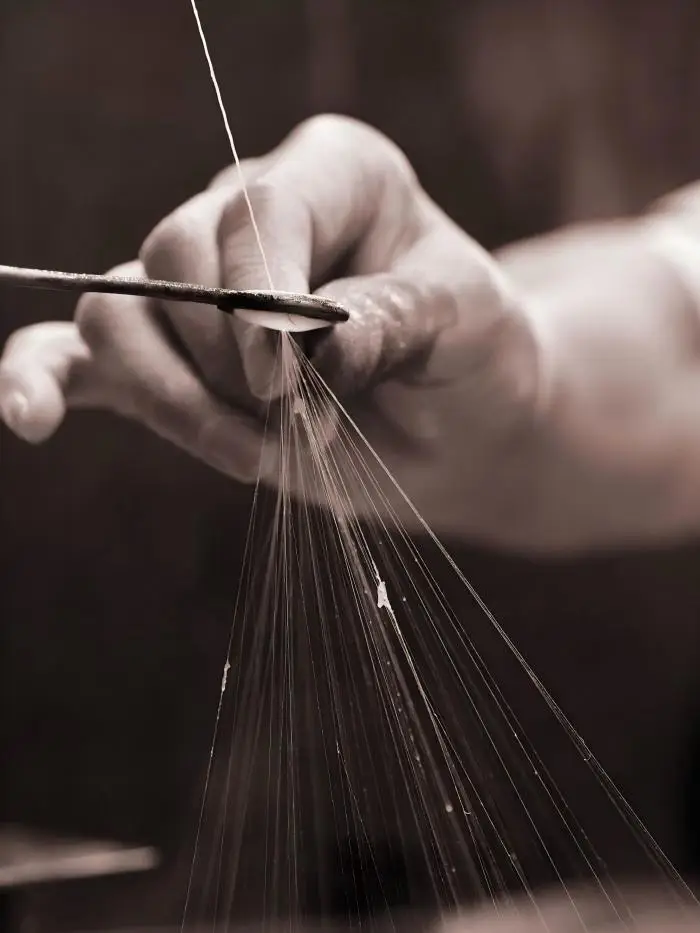
Reeling: The process of extracting silk from mulberry silk cocoons is commonly known as reeling. Reeling is the first major step in the process, where the cooked silk is separated and unraveled according to the desired finished product specifications before being combined to create raw silk.

Weaving: After processing, the raw silk is separated into warp and weft threads, which are then interwoven according to specific craftsmanship to form silk fabric.

Refining: Also known as degumming, the refined raw silk becomes cooked silk. Silk consists primarily of sericin, which is coated with sericin. Sericin contains impurities that significantly affect the subsequent printing and dyeing process, so it must be removed.
Sericin is easily soluble in hot water due to the effects of chemicals or enzymes. Therefore, a combination of soap and soda ash is often used for refining.

Finishing: The finishing process primarily addresses issues left behind by previous steps, such as moisture, unevenness, and wrinkles. By ironing, calendering, stretching and weft straightening, adding antistatic agents and fire retardants, etc., silk fabrics can be made wrinkle-resistant, soft and comfortable to wear.

Pure Silk Fabric 4
Pure Silk Fabric 1

Pure Silk Types

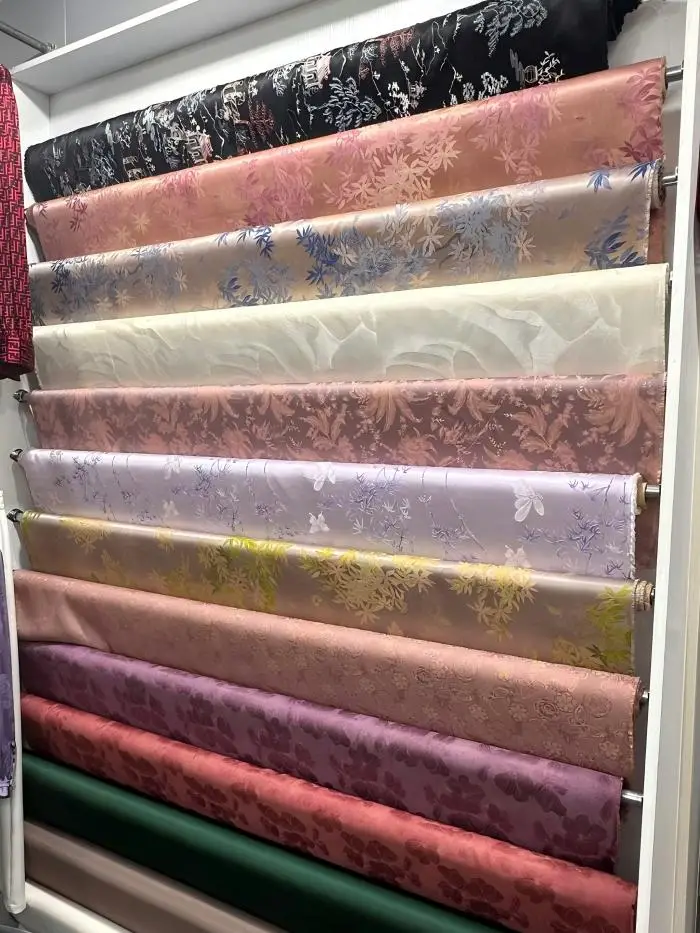
Pure silk can be divided into 15 categories based on fabric weave and processing techniques: spun silk, crepe, satin, damask, gauze, leopard, velvet, brocade, gauze, woolen cloth, kudzu, silk, silk, and embroidery.

Within these 15 categories, gauze, leopard, and velvet are classified based on their weave, regardless of whether they are printed or not. Each type of silk can be bleached, dyed, or printed.

How to Identify Pure Silk?

There are two main ways to identify real pure silk: visual inspection and feel, and burning it.

Visual inspection and feel: Real silk has a soft, non-glaring luster and feels soft, smooth, and comfortable.

Real silk is highly elastic, leaving virtually no creases when folded in half, and easily returns to its original shape.

Some artificial silks lack elasticity and are not as comfortable to wear as real silk.

Identifying real silk by burning: Silk burns with virtually no flame, leaving fine black ash that can be crushed by hand.

Real silk contains protein fibers, so it has a burning smell like hair.

Artificial silk burns with flames and a plastic smell, leaving behind hard, rubbery lumps.

Pure Silk Fabric 2
Pure Silk Fabric 3

How to care for pure silk?

When washing pure silk clothing and fabrics, avoid rubbing or washing it in a washing machine. Soak the silk item in cold, clean water for several minutes. Then, add a silk detergent to the clean water and let it soak for several minutes, then rinse repeatedly.

Note the following points when washing silk:
1. Wash dark and light colors separately.
2. Do not use water above 30 degrees Celsius.
3. Do not wring or rub the silk vigorously, and do not use a hard-bristled brush.
4. After washing, do not wring the silk. Instead, lay the garment flat on a towel and gently press with another towel to absorb the moisture.
5. When drying, dry the silk in the shade, not in the sun.