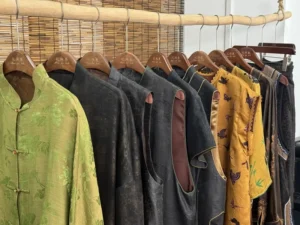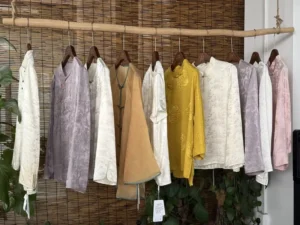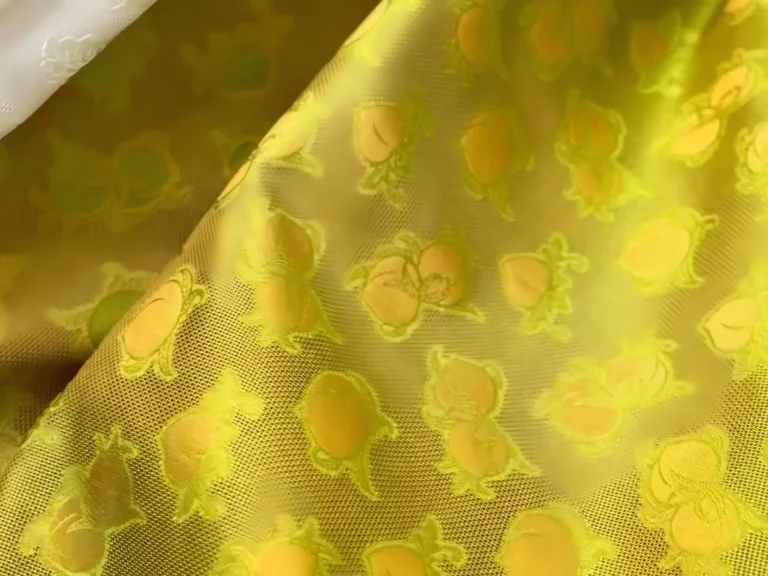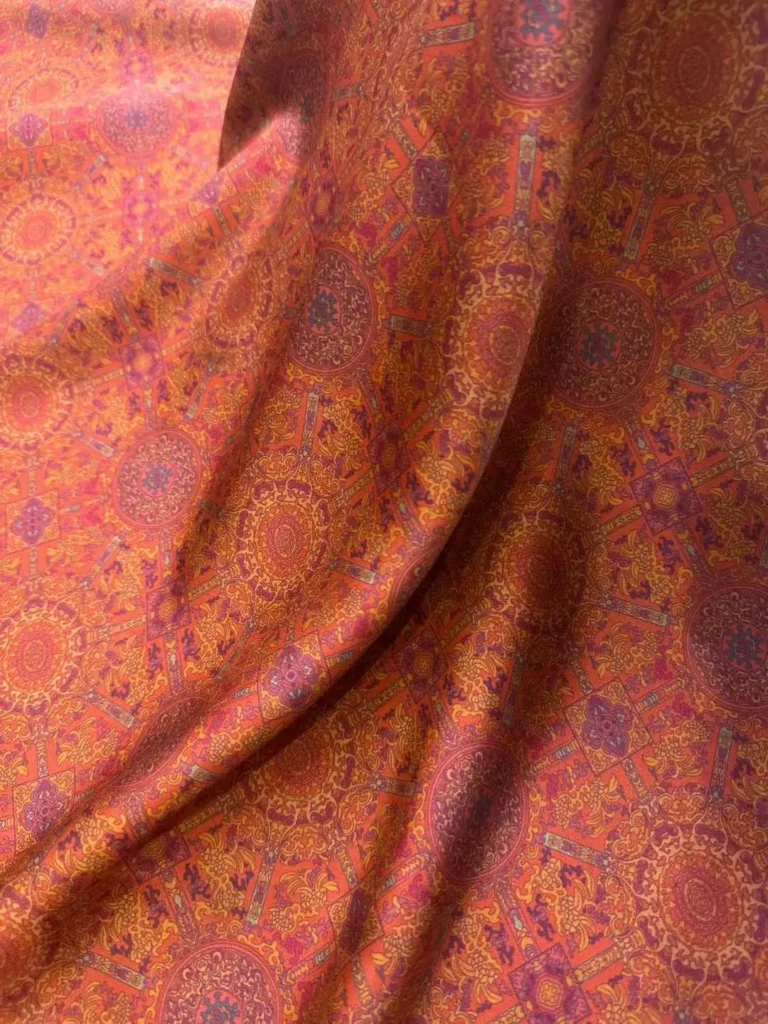

Shu Brocade (referred to as Shujin 蜀锦) originated in the Chengdu area of Sichuan Province. As the head of China’s four major silk brocades, it has been widely circulated along the Silk Road.
Shu Brocade once adorned the imperial robes of Chinese emperors. As the saying goes, ‘where Threads Weigh as Heavy as Gold’ and it has also written an immortal artistic chapter for Chinese civilization.
Shu brocade has been currently listed as an intangible cultural heritage recognized by the United Nations Educational, Scientific and Cultural Organization. In Chengdu, you can still see the weavers weaving the warp and weft brocade manually on the traditional loom, which is incredible.
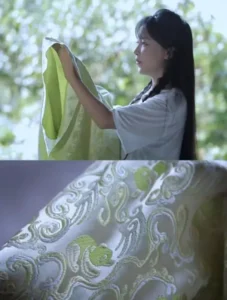
What makes Shu Brocade the ‘Mother of Brocades’?
Shu brocade is a kind of composite silk fabric based on warp, which is produced in Sichuan Province. It’s renowned as the ancientest and most prestigious of China’s four famous silk brocades, standing on equal footing with Cloud Brocade (Nanjing), Song Brocade (Suzhou), and Zhuang Brocade (Guangxi). Its weaving tradition and loom design had a profound impact on the brocade culture in China and abroad since then.
The reason why Shu brocade is different from other Chinese silk brocade in the following three characteristics:
- Rich in color – based on natural mulberry silk as raw material, dyed with cooked silk to weave 5 square colors: red, yellow, green, blue, black, and then interwoven into colorful patterns.
- Structural precision – weaving on one wooden jacquard loom requires up to 120 independent processes.
- Profound meaning patterns – each pattern contains the cultural and religious significance of ancient Chinese philosophy.
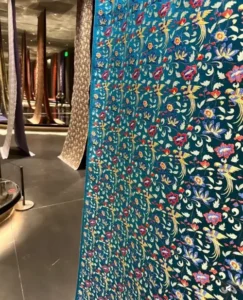
The History of Shu Brocade
Originated in the ancient Shu period
The history of Shu brocade can be traced back to the ancient Shu State, and it occupies the Chengdu Plain from about 1046 BC to 316 BC. As early as the Warring States Period (475-221 BC), this area has formed mature sericulture and weaving techniques. The Laoguanshan Loom unearthed from the Han Dynasty in Tianhui Town, Chengdu, has physical proof that the jacquard loom has been used for warp composite weaving.
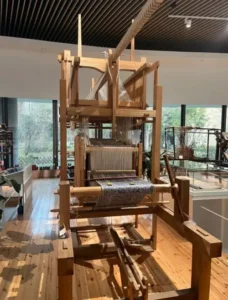
When Shu Brocade Rivaled Gold – The Han & Tang Dynasty
During the Western Han Dynasty, the Sichuan brocade industry developed rapidly, so that the court sent officials to Chengdu to supervise the production. The imperial court set up an exclusive government office in Chengdu called the City of Brocade Officials, which earned Chengdu the nickname ‘Brocade City’. Because of the brocade that workers often washed and woven at the riverside at that time, the river was named ‘Brocade River’ as well.
By the Tang Dynasty in China, Shu brocade had become one of the most important export goods reaching Southeast Asia, Europe and the Soviet Union through the Silk Road. Historical records describe it as ‘worth its weight in gold’, a tribute to its value as well as a testament to the exceptional craftsmanship behind it.
The Three Kingdoms Period: Shu Brocade Sustained the State
The most legendary chapter in the history of Shu brocade unfolded during the Three Kingdoms era. Zhuge Liang, Chancellor of the Shu Han regime, specially established the post of “Brocade Official” to oversee the production and management of Shu brocade. As a result, Shu brocade became a strategic economic resource that financed the military campaigns of Shu Han.

What Are the Procedures In the Weaving of Shu Brocade?
In the existing various traditional weaving processes, the production of Shu brocade is extremely time-consuming and laborious. From silk selection and natural dyeing to the final finished product washing and finishing, the whole process comprises over 120 distinct steps.
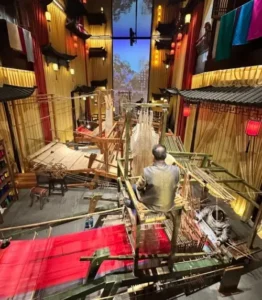
This weaving process uses a large jacquard loom, up to several floors, composed of thousands of bamboo and wood components. In Sichuan Museum, there is a well-preserved physical display of Qing Dynasty looms. During weaving, two weavers usually work together: one manages the weft line under the machine, and the other controls the weft line above. Even skilled paired weavers may only weave a few centimeters of finished fabric one day.
The main processes of Shu brocade production include:
- Silk selection – only use the finest natural silk.
- Natural dyeing – traditional use of plant and mineral dyes, showing the iconic red, brown, black tone.
- Pattern drafting – pattern design, drafting and Harness-tying, and finally mounting the pattern onto the loom.
- Weaving – the warp and weft threads are interwoven using jacquard‑style heddles.
- Finishing – the fabric is washed, stretched, and inspected for pattern consistency.

Interpretation of Shu Brocade Pattern & Symbolic Significance
The patterns of Shu brocade are never conceived arbitrarily. Each motif carries the profound meaning accumulated in thousands of years of cultural and religious life in Sichuan. The most representative traditional patterns include:
Four Heavenly Kings Hunting Pattern – a classic pattern in the Sui and Tang Dynasties, depicting the four celestial guardian kings integrating Buddhist iconography with the majestic momentum of hunting.

Lingyang Duke Pattern – Tang Dynasty’s exquisite pattern, with the relative animal placed in the staggered flower round frame, showing the rich Sassanid and Sogdian artistic style absorbed through the Silk Road communication.

Cloud and Dragon Pattern – Coiling dragons winding between clouds, symbolizing imperial power and cosmic power.

Eight‑Direction Halo Pattern – geometric cloud-like repetitive pattern is widely used in court textiles of the Qing Dynasty.
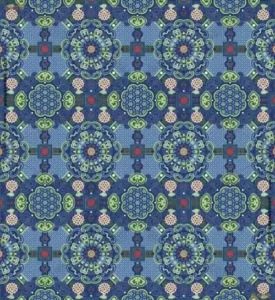
Winding Peony – lush peony branches in full bloom, meaning wealth, beauty and noble social status.

During the first millennium of AD, the aesthetic style of Shu brocade was deeply influenced by Sassanian, Sogdian and Hellenistic art traditions, which was the direct result of Shu brocade’s trade through the Silk Road. Elements such as winged horses, beaded patterns and hunting scenes from Persian and Central Asian art naturally blend with Chinese cosmological symbols.
Why Was Shu Brocade Inscribed on the Intangible Cultural Heritage List?
In 2006, Shu brocade weaving was included in China’s first batch of national intangible cultural heritage list, affirming its historical, artistic and social value. This recognition echoes the framework of UNESCO’s protection of endangered living traditions, recognizing that Shu brocade is an exhibit of the museum, besides also a living skill inherited by generations of professionally trained craftsmen.
At the beginning of the 20th century, the traditional Shu brocade weaving was on the verge of extinction. Its inclusion on the national intangible cultural heritage list spurred comprehensive efforts—institutional support, museum engagement, and apprenticeship training programmes—that have enabled the craft to endure.
In recent years, Shu brocade has gained further international prominence: its patterns have been integrated into the medal design of the 31st World University Summer Games in Chengdu in 2023, bringing this ancient Chinese silk fabric to the global sports stage.
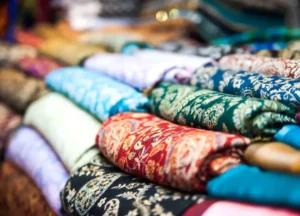
Looking to buy fabric?
You can also purchase SilkYue’s exquisite fabrics and make your own favorite items.
Customization and Innovation
You can tell us the fabrics and styles you like (clothes, pants, sachets, bags, etc.), and SilkYue will make customized samples.