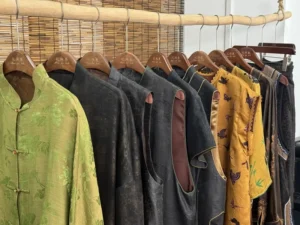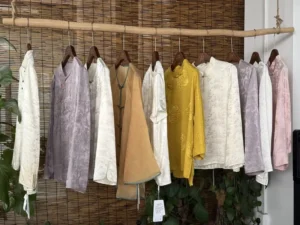
Song Brocade is a weft-faced patterned silk fabric originating from China’s Spring and Autumn period and flourishing in the Song dynasty (960–1279). Its primary production area is Suzhou, hence the name “Suzhou Song Brocade.” The craft dates back to the noble use of brocade in the State of Wu during the Spring and Autumn period, evolved through the Sui and Tang dynasties, and was finally formalized in the Southern Song dynasty, emerging as a distinctive type of brocade with unique weaving structure and artistic style.
As one of the Four Great Brocades of China (Nanjing Cloud Brocade, Sichuan Shu Brocade, Jiangsu Song Brocade, and Guangxi Zhuang Brocade), it is made entirely from 100% mulberry silk and requires over twenty meticulous steps to produce. In 2009, as an integral part of “Chinese sericulture and silk craftsmanship,” it was inscribed on the UNESCO Representative List of the Intangible Cultural Heritage of Humanity.
Have you ever wondered why one-meter pattern silk consumes hundreds of hours? Why did leaders of all countries choose this fabric at the international summit? It is called ‘Song brocade’ in Chinese, which is far from ordinary cloth. One side of the fabric, carrying the history of the millennium palace-read what is Song Brocade, and then read one of China ‘s most exquisite textile traditions. This article will answer this question completely and guide you to be truly worthy of support.
What is Song Brocade? – The Historical Origins and Derivation of Song Brocade
The history of Song Brocade can be traced back to the Sui and Tang dynasties, as it developed on the basis of Sui-Tang brocade weaving techniques. During the Tang dynasty, with the completion of The Grand Canal, the weaving techniques of Han dynasty warp-faced brocade, Tang dynasty weft-faced brocade, and Shu Brocade were introduced to Suzhou, laying the technical foundation for the birth of Song Brocade.
By the Song dynasty, Emperor Gaozong of Song, seeking to meet the demands of court attire and the mounting of paintings and calligraphy, actively promoted Song Brocade and specially established a Song Brocade Weaving Office in Suzhou.
After the Southern Song court moved south to Lin’an (present: Hangzhou), a large number of imperial paintings, calligraphic works, stele rubbings, and ancient books were also relocated to the south. There arose an urgent need for a mounting material that was smooth, fine, durable, and elegantly colored. The heavy, richly saturated Tang Brocade and Shu Brocade, however, could not suit the refined, understated aesthetic of the Song literati. In response, the Southern Song court established a weaving workshop in Suzhou, gathering skilled weavers from various regions to improve the weaving methods. They innovatively created a weaving structure featuring a double warp beam and a configuration of two warps to three wefts — and thus Song Brocade was born.
It is worth noting that Song Brocade was not originally called by this name. During the Southern Song period, it was mainly used for mounting paintings and calligraphy and was commonly known within the trade as “mounting brocade”. It was not until the Qing dynasty that later generations, in homage to the pattern styles of the Song dynasty, formally named it “Song Brocade.” Historically, the local name in the Suzhou area was “Wu Brocade,” which is essentially the same as Song Brocade in origin and substance.
How Is Song Brocade Woven?— Detailed Explanation of the “Weft-Faced Pattern” Technique
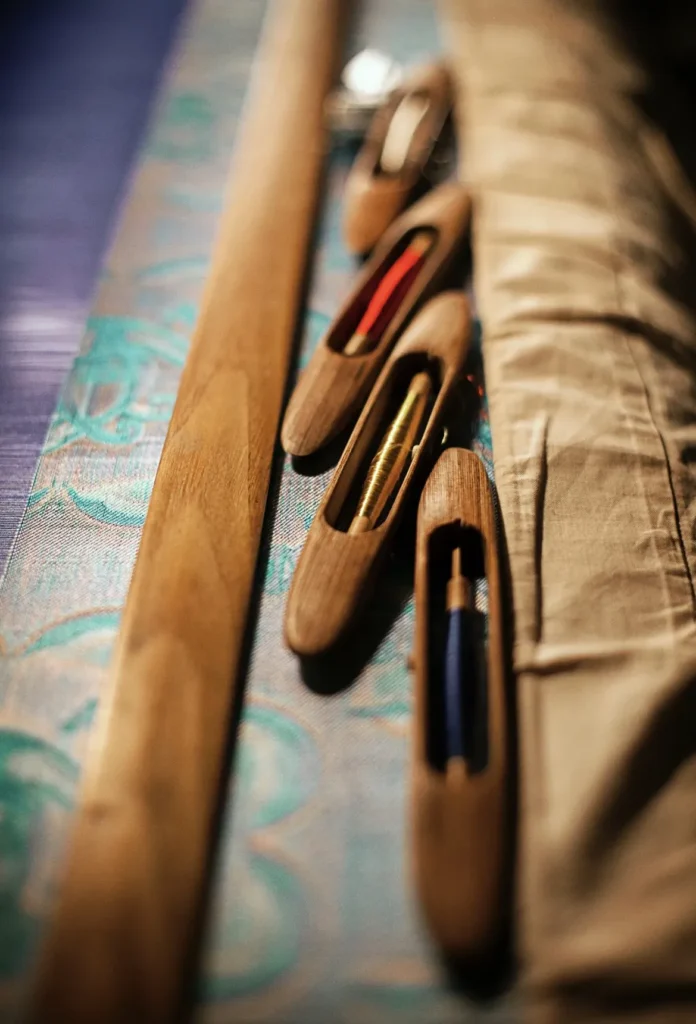
Song Brocade is woven entirely from pure mulberry silk. Its most distinctive feature lies in the “double warp beam, two warps and three wefts” structure. The base warp forms the background color and texture of the fabric, while the face warp consists of undyed raw silk, which secures the floating pattern wefts. At the same time, three layers of wefts (pattern weft, ground weft, and color-dot weft) are used to reveal colors in layers, resulting in a unique texture that is thin yet opaque, flat and firm, with three-dimensional patterns.
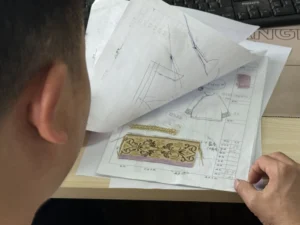
In addition, Song Brocade employs the “color throwing and exchange” technique: a long-run shuttle lays down the base color over large areas, while a short-run shuttle changes colors in segments for local detailing. This allows a single piece of brocade to achieve a natural gradation of more than ten colors without increasing the fabric’s thickness. This is precisely why Song Brocade is so rich in color yet remains elegant and never garish. From silk reeling and dyeing to the finished product, the process involves over twenty meticulous steps, including pattern design by the craftsman, silk selection and dyeing, silk winding, warping, drawing in and mounting the loom, tying the pattern book, hand weaving, and final finishing and setting. The colors complement rather than clash with each other – busy but not chaotic, bright but not vulgar.
For a glimpse of the actual loom and hand-weaving process, the short video below offers an excellent visual reference:
If you wish to experience the raw material behind the fabric, SilkYue uses Grade A silk—the very foundation on which quality brocade relies. You can also purchase the fabric by the meter for your own creative projects.
Main Categories and Characteristics of Song Brocade
Depending on differences in structure, craftsmanship, materials, fabric thickness, and functional performance, Song Brocade can be divided into four categories: Heavy Brocade, Fine Brocade, Case Brocade, and Small Brocade.
- Heavy Brocade is the most precious variety of Song Brocade. It typically uses scoured and dyed silk threads along with gold threads as wefts, and raises polychrome velvet flowers on a three-leaf twill ground. The fabric is thick and substantial, with richly layered patterns that are resplendent and multicolored. Heavy Brocade was primarily used for various decorative pieces in imperial palaces and grand halls, such as hanging scrolls, murals, Buddhist painting scrolls, and the ceremonial robes of emperors and empresses.
- Fine Brocade is the most fundamental and representative type of Song Brocade. Its silk threads are of moderate thickness, and the fabric is balanced in weight, making it the most widely applicable. In ancient times, it was used for official garments and the mounting of precious paintings and calligraphy; today, it is often used for neo-Chinese style apparel and as a fabric for state gifts.
- Case Brocade is relatively soft in texture with a lower warp and weft density. It is specially used for edging ancient book leaves and for covering and binding exquisite boxes intended for scholarly collectibles.
- Small Brocade is mostly a plain or small-patterned single-layer fabric, light and thin in texture with delicate, fragmented motifs. It is suitable for mounting small, refined handicraft boxes, such as fan cases, painted eggshell boxes, and silverware boxes.
Common Patterns of Song Brocade
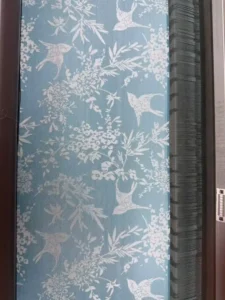
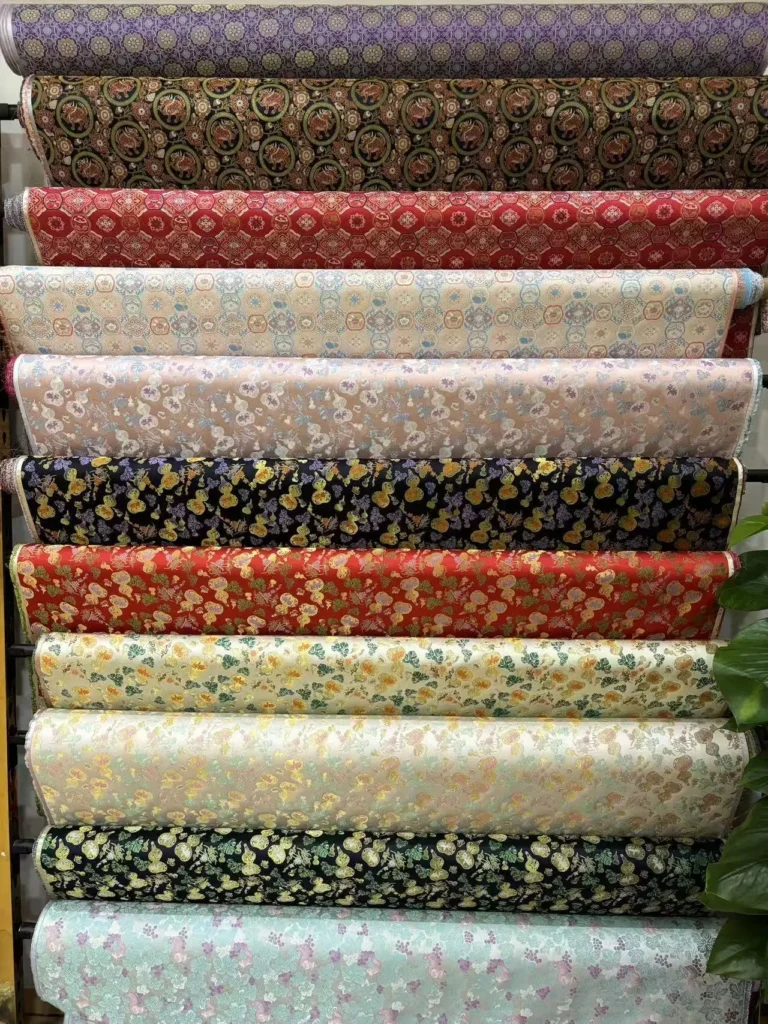
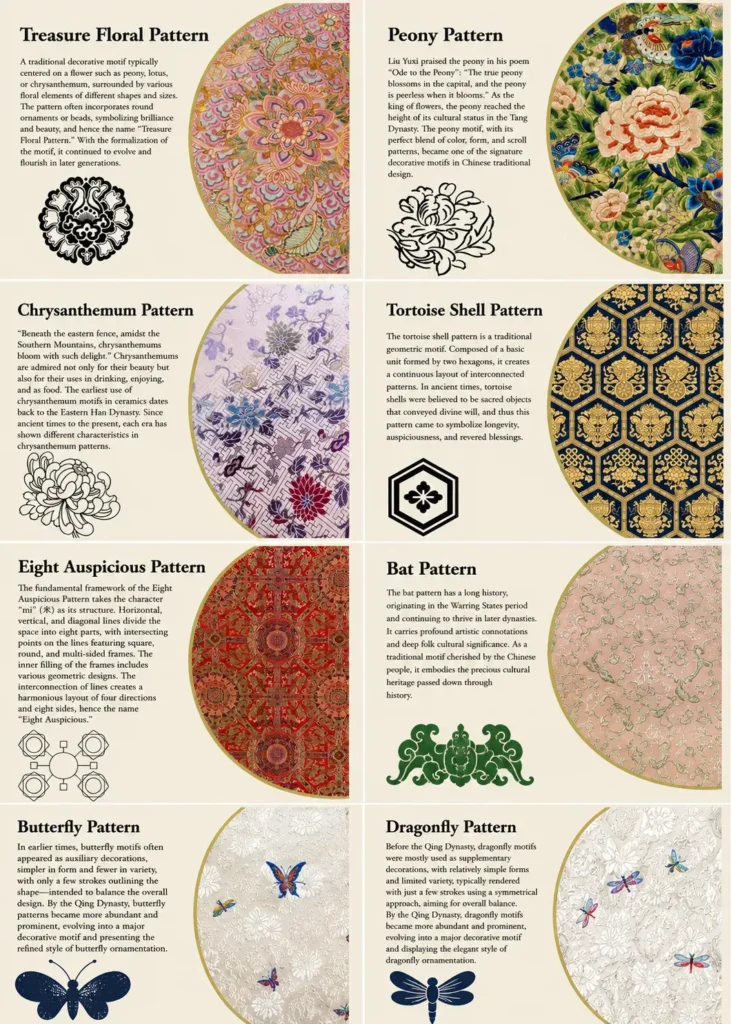
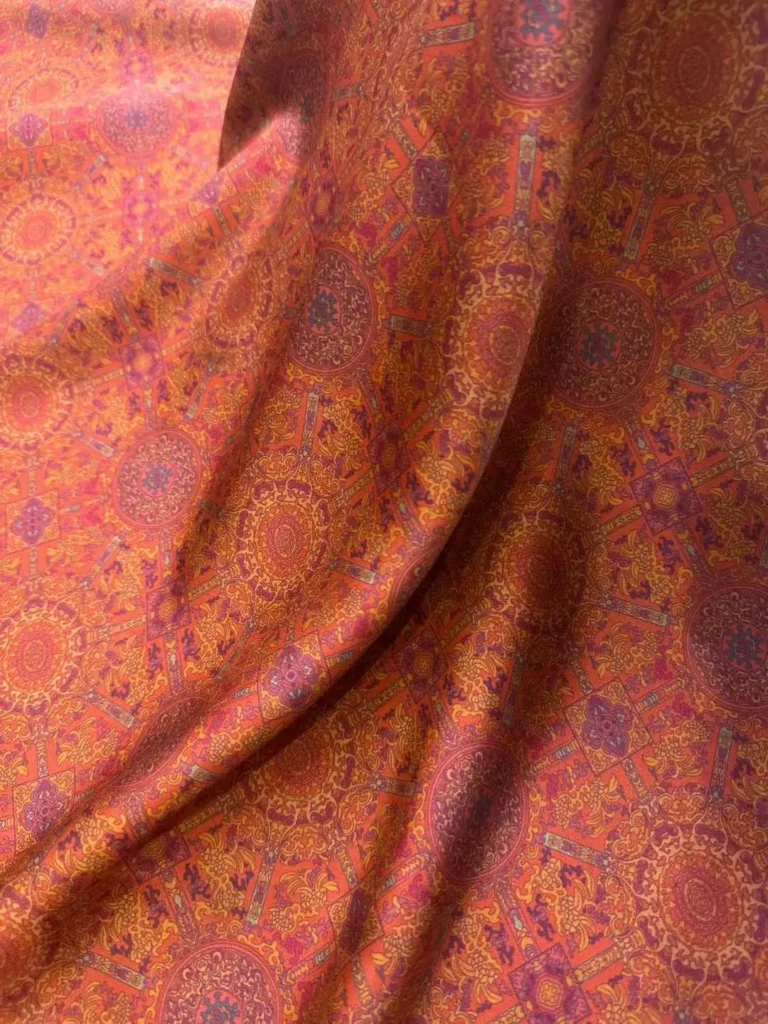
The patterns and motifs of Song Brocade are mostly varied and richly expressive, flowing with liveliness and fluidity. The color schemes are elegant and harmonious, exuding a bright yet antique charm. The craft favors low-saturation natural mineral and plant dyes, such as azurite blue, indigo, gold clay, ochre, beige, and ivory white, resulting in a warm, mellow palette that is brilliant without being flashy. Among the common motifs, the Eight Auspicious Pattern once served as a marker of official rank during the Ming and Qing dynasties: officials of the third rank and above were entitled to use azurite blue with gold clay, while those below the sixth rank could only use a plain, gold-free eight auspicious pattern; among the general populace, the use of the golden one was strictly forbidden. Other frequently seen motifs include the Treasure Floral Pattern, Flowers and Birds, Tortoise Shell, Bats, and Butterflies—all of which are often woven into Song Brocade fabrics.
Why Song Brocade Remains Significant Today: UNESCO Intangible Cultural Heritage Status and the Revival at APEC 2014
Song Brocade is no mere antique displayed in museum cases—it is a living, continuously transmitted craft. In 2006, the weaving technique of Song Brocade was included in the first batch of China’s national intangible cultural heritage list by the State Council; in 2009, it was further inscribed on the UNESCO Representative List of the Intangible Cultural Heritage of Humanity.
With the rise of the “Neo-Chinese style” trend, this fabric has returned to the spotlight. According to China Global Television Network (CGTN), the “new Chinese outfits” worn by leaders at the 2014 APEC summit in Beijing featured Song Brocade as their core fabric. Since then, it has reappeared on runways such as the China International Fashion Week Autumn/Winter 2024. Today, designers are crafting it into cheongsam, outerwear, and a variety of accessories – including a Song Brocade silk vest worn by XÆ A-Xii, son of Elon Musk, in the same style.
To see how this ancient craft is being woven into the contemporary wardrobe, you are welcome to browse the complete Song Brocade collection at Silkyue.
Main Uses of Song Brocade
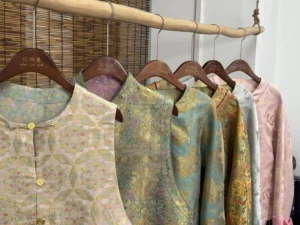
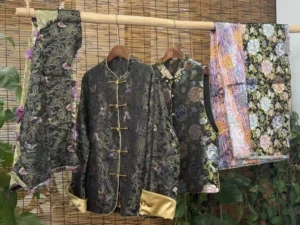
With the passage of time, the applications of Song Brocade have continued to expand. In the realm of apparel, owing to its distinctive texture and patterns, Song Brocade is frequently used as a high-end fabric for garments such as cheongsam, vests, and outerwear, lending an air of opulence and cultural depth to the wearer.
In home decoration, Song Brocade can be employed in screens, hanging scrolls, cushions, and throw pillows, infusing interior spaces with a touch of classical elegance and refinement.
Furthermore, Song Brocade is also crafted into various artisanal objects, including brocade boxes, brocade pouches, and sachets.
As one of the quintessential representatives of traditional Chinese culture, Song Brocade is often presented as premium gifts, conveying heartfelt sentiments and best wishes. Given the complexity of its production process and the consequent limited output, it also holds considerable collectible value.
Previous Song Brocade, New Song Brocade, and Imitation Song Brocade
Previous Song Brocade is woven on traditional iron-wood looms, with shuttles passing back and forth to create patterns that possess a three-dimensional quality. The fabric feels full and substantial yet not stiff, and its selvedges are smooth – hence the common term “smooth-edge” brocade. It’s made from 100% mulberry silk, with every thread dyed using purely plant-based pigments for color fixation. The patterns exhibit distinct boundaries and a tangible textural feel, while the colors display an iridescent, lustrous sheen.
New Song Brocade, by contrast, is produced on modern high-speed rapier looms, with a width of up to 140 centimeters. While this allows for higher output, the fabric tends to be relatively stiff to the touch, with rough selvedges and less pronounced three-dimensionality in the patterns. In some cases, the warp or weft threads may be partially replaced with artificial silk (rayon) instead of mulberry silk. Although the weaving process is similar to that of the previous style, the artificial silk is coarser, resulting in less refined patterns and more blurred motif boundaries.
Imitation Song Brocade mainly replicates the patterns of Song Brocade using simple jacquard weaving techniques. Though it may resemble Song Brocade in appearance, its texture and craftsmanship fall far short of the genuine article.
How does Song Brocade differ from Shu Brocade?
The core difference lies in the weave structure: according to China Daily, one features weft‑faced patterning, while the other is warp‑faced. In terms of visual impression, Suzhou Song Brocade tends to be refined and geometric, whereas Shu Brocade is more intense and flamboyant.
Can Song fabric be washed with water?
Generally, no – dry cleaning is recommended. Because Song Brocade is woven with a mix of raw and degummed silk, exposure to water can distort its hand feel and luster, unlike Shu Brocade, which is made entirely of degummed silk. You may test a small, inconspicuous area first, but it is best to entrust it to professional cleaners to preserve its color and multi‑layered structure.
Why is Song Brocade so expensive?
Authentic pieces command a high price because they are made from fine mulberry silk and require over twenty production steps that rely heavily on manual craftsmanship. The finest handwoven examples cannot be replicated by modern mechanical looms.
Is Song Brocade still being produced today?
Yes, it is still being produced. UNESCO‑recognized inheritors in Suzhou continue to preserve and pass on the craft, and the growing demand for “Neo‑Chinese” style has revitalized production – according to People’s Daily, dozens of enterprises in Suzhou are now weaving Song Brocade. It appears in cheongsam, coats, vests, and various accessories, and enjoys strong sales worldwide.
Looking to buy fabric?
You can also purchase SilkYue’s exquisite fabrics and make your own favorite items.
Customization and Innovation
You can tell us the fabrics and styles you like (clothes, pants, sachets, bags, etc.), and SilkYue will make customized samples.